
Being intentional about developing problem solving skills in students means that planning is critical. Within any lesson plan, pursing problem solving should be an integrated aspect of the plan. Then being intentional about including it, the following steps should be followed to begin and continue with the problem-solving process:
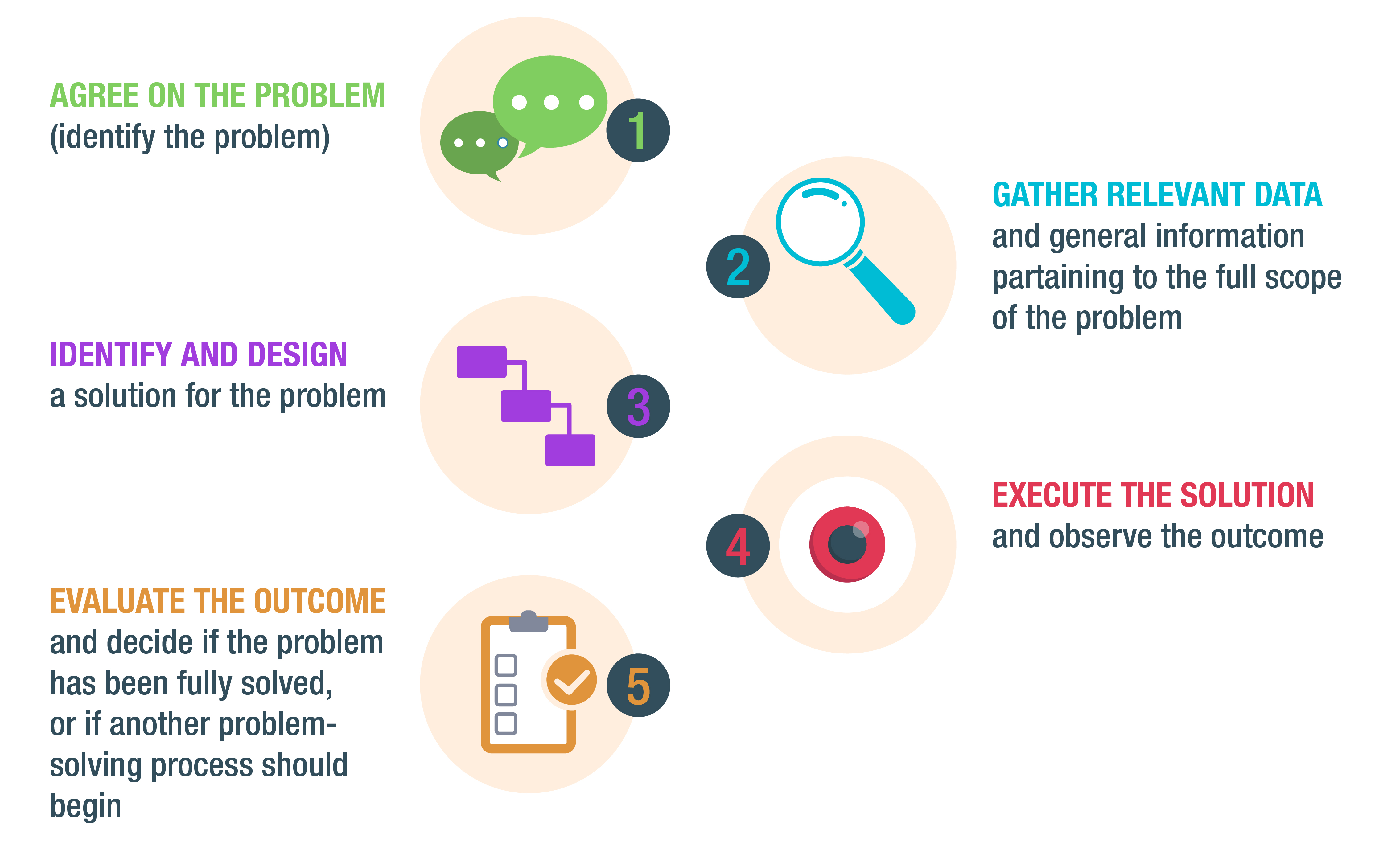
There are many sources to find free problem-solving lesson plans and numerous ways in which to design the process. Think about the subject area and the desired outcome before selecting the best plans for your students.
Applied Educational Systems explains:
Teaching is often viewed as conveying information. But teaching involves so much more than just knowledge. It also requires a lot of higher order thinking, especially in secondary and post-secondary classrooms. This is especially true for problem solving. Teaching problem solving skills is much harder than delivering a lesson based only on knowledge. It also helps your students succeed in the future that much more. The solution to instilling these thinking skills lies in problem solving lesson plans. These are the five best problem-solving lesson resources for any grade level:
TeacherVision - TeacherVision is a paid digital resource that offers free online lesson plans.
Ed Creative - Ed Creative is a subdivision of Education.com that collects lesson plans from other online resources.
Discovery Education - Discovery Education is a branch of the Discovery Channel, the world leader in educational television programming.
BrainPOP - BrainPOP is a common core curriculum developer with lots of teaching resources for every grade level.
TEDEd - TED is best known for its branded TEDTalks. TEDEd is also an active advocate of education and learning materials.
All of these resources have both pros and cons, so looking at each one individually is key when planning your problem-solving lessons.
TIP: Plan intentionally but plan effectively for problem solving.
Coming up next, “I teach young children, so this doesn’t concern me.” Stay tuned...