
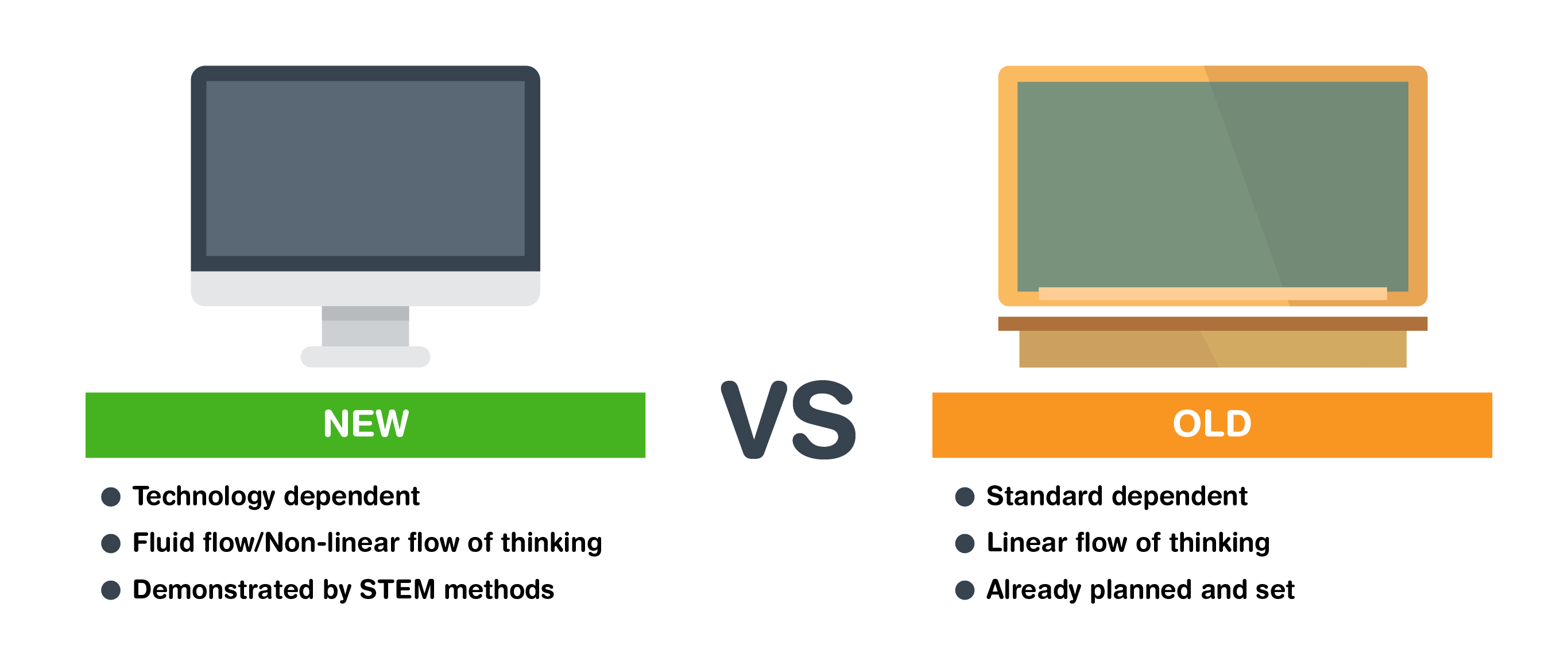
As we have been discussing, it is vital for teachers to realize how differently current students think. How, meaning the way in which they think – the logical flow, the connections and the non-linear follow through. You may be a young teacher, so you may think the same way. For older teachers, this can be a challenge, given how you think and also how you learned “back in the day”. Even if you are a young teacher, maybe the way in which you were taught was different from where you see your students are today. Maybe you think the way in which education is standardized is frustrating and over-prescribed. I know the amount of administration required in today’s educational system makes everyone feel exhausted at times!
In realty, however, while integrated learning might sound abstract or too fluid, the result in student learning and understanding will convince you that it is well worth it. The power of choice has never been as real as it is today. With new and newer technology, students are familiar with choosing options through the web and how to synthesize those variables into one logical flow. Those skills are being developed with the use of technology. STEM education has also demonstrated that in preparing students for their future and the kinds of jobs they will need to obtain and maintain, these skills must be maximized, not minimized in favor of a more linear flow of yesterday.
Therefore, rather than abstract, integrated learning is decidedly more relevant and real for students today! In a 2017 article I published with Campus Technology, I concluded:
In reality, technology has and will continue to change our world and how everything is processed, organized, delivered and operationalized. I would suggest that we have always been focused on student success and achievement and the goal of helping students acquire new knowledge and apply new skills.
Use this creatively in your instructional design and truly support the effective and relevant learning of your students.
TIP: Think through your lesson plans and widen their scope and expand the application for students.
Coming up next, “I don’t teach Philosophy!!” Stay tuned...