
So, let’s demystify the process of planning for inclusion. We have already discussed the importance of knowing each student and providing options for them to use their skills and preferred styles in learning. It is important to intentionally plan to include each student as we have also discussed.
TeachHub.com suggests:
If you are a teacher of students within an inclusion classroom, then you are probably a creative, caring, patient, innovative, resourceful, structured, and flexible person. Whew!
Overall, the most important thing to remember is to always have high expectations for your students and to highlight their strengths.
The article suggests “18 Surefire Inclusion Strategies”. While the focus of the article is the K-12 application of the concept of “inclusion” regarding students with disabilities, much of the article is applicable to all students regardless of age and subject area. Here are several practical strategies from their list:
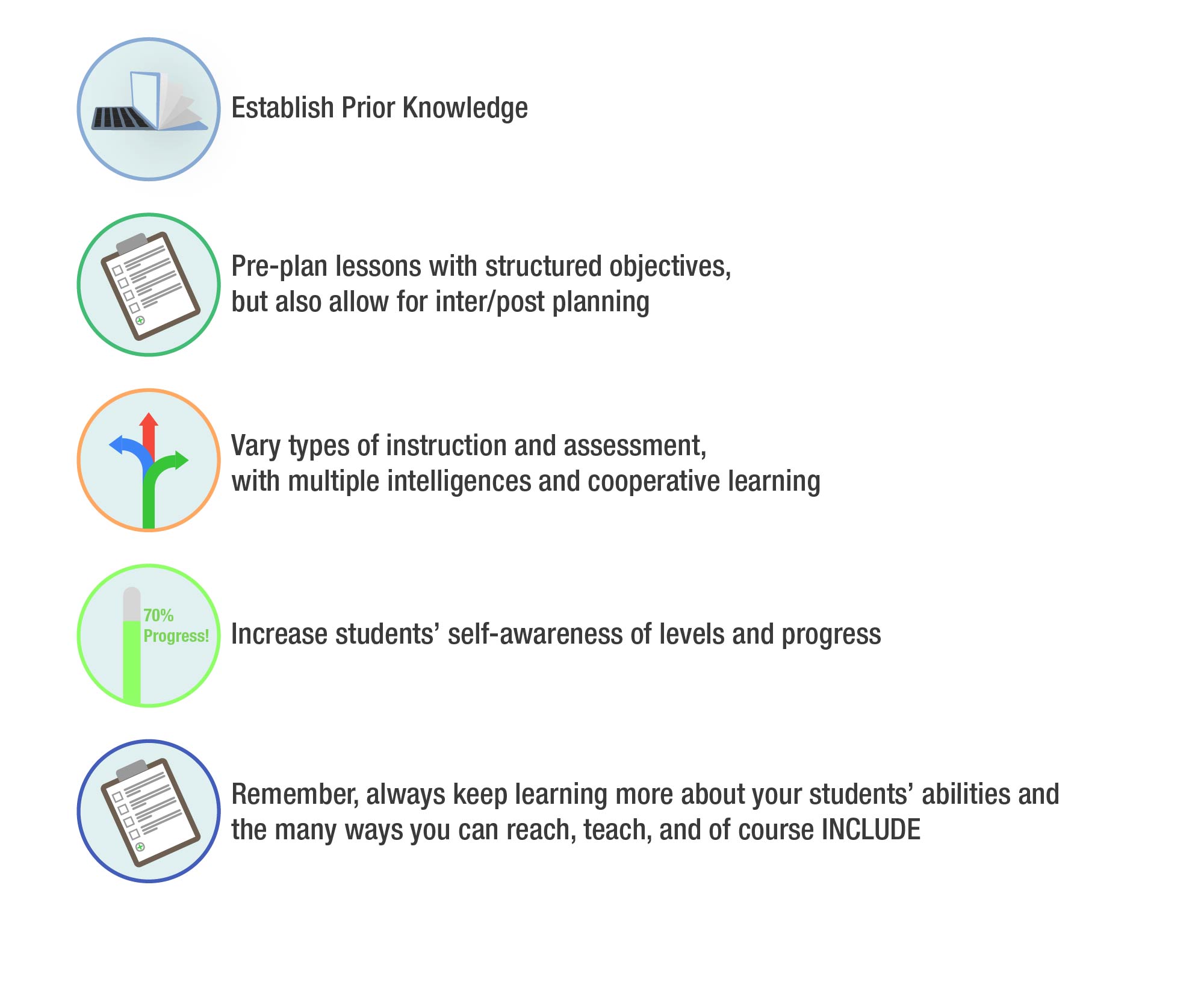
The “broad strokes” here, then, are that in order to include every student, teachers must know every student and vision his/her potential. Lead and support students forward in their learning and intentionally empower each student to learn and go on learning.
TIP: Design instruction that is flexible enough to reach every student.
Coming up next, “I teach young children, so this doesn’t concern me.” Stay tuned...