
Here is a helpful explanation of facilitated learning:
Facilitated learning is where the students are encouraged to take more control of their learning process. The trainer's role becomes that of a facilitator and organiser providing resources and support to learners. In turn the participants learn with and from each other as they identify and implement solutions to challenges, problems or other developmental issues. They might also set their own objectives and be responsible for learning assessment.
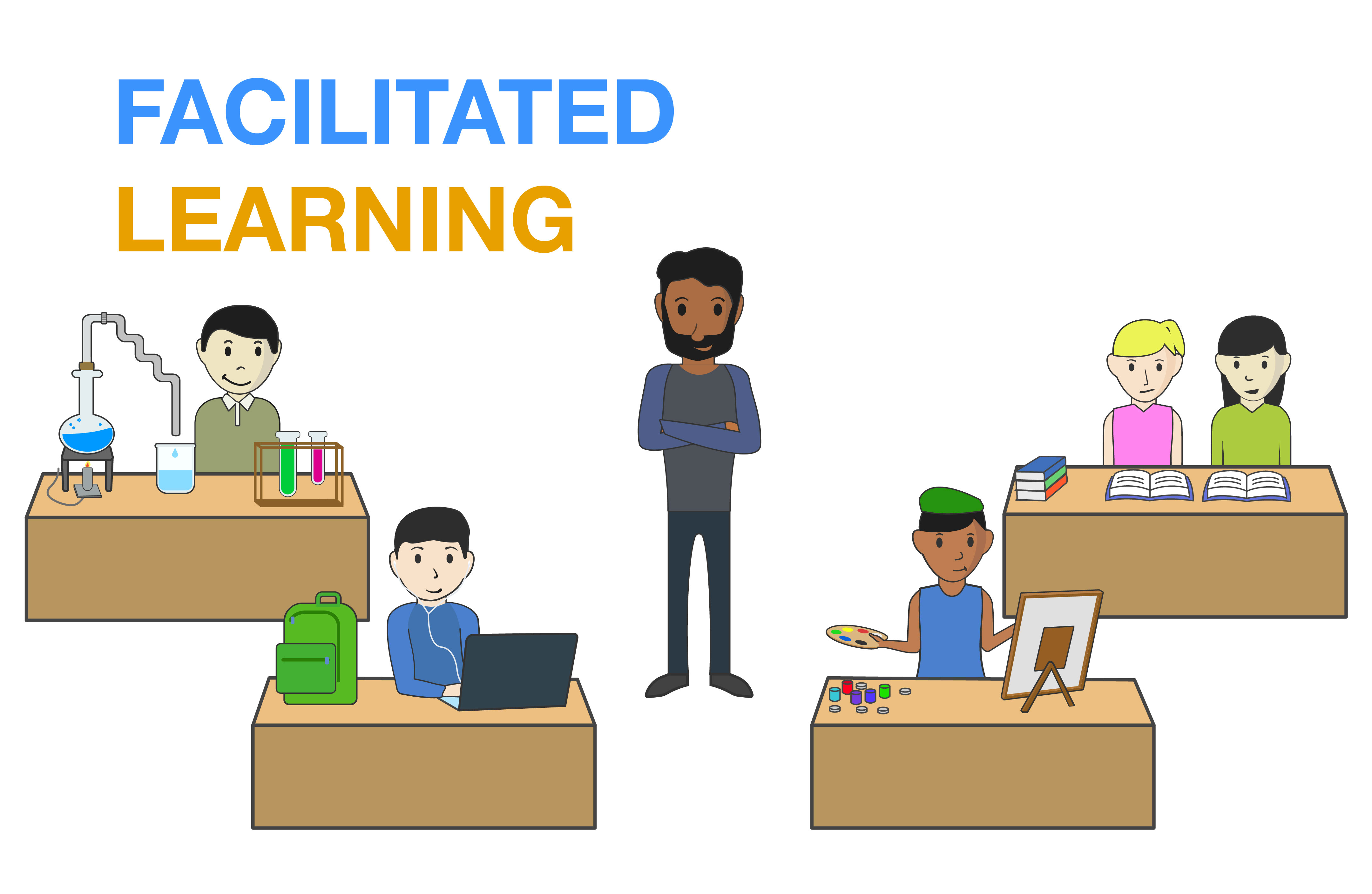
This is from the International Council on Archives and they further suggest:
Facilitated learning is based on the premise that the more responsibility a student takes for his/her own learning, the more effective the training or education will be. The advantages are:
The "downside" is that there is no exact role for the teacher. That is, while there are huge benefits and various different instructional design choices that can be made, the reality is that the teacher must be adaptable and creative and flexible in order to truly support students throughout. Therefore, in this case, vague is good! The teacher facilitator moves with the flow of the learning process and that is truly a benefit.
TIP: "Dynamic Teaching = Flexibility and Adaptability" - Ruth Reynard
Coming up next, "How does coding relate to hands-on?" Stay tuned...