
The Cambridge Dictionary captures the usage of the terms, "hands-on" as, "involved" or "doing". For example:
Someone with a hands-on way of doing things becomes closely
involved in managing and organizing things and in making decisions
She's very much a hands-on manager.
Therefore, rather than imposing ideas, procedures, methods etc., the idea is that each student should be given scope to think through, plan, organize and do. While some students may not have very high confidence, the focus of the teacher should be to strengthen that rather than dismiss activities that may, themselves, help to increase student autonomy and authenticity as well as confidence.
Let's think about all three of those again:
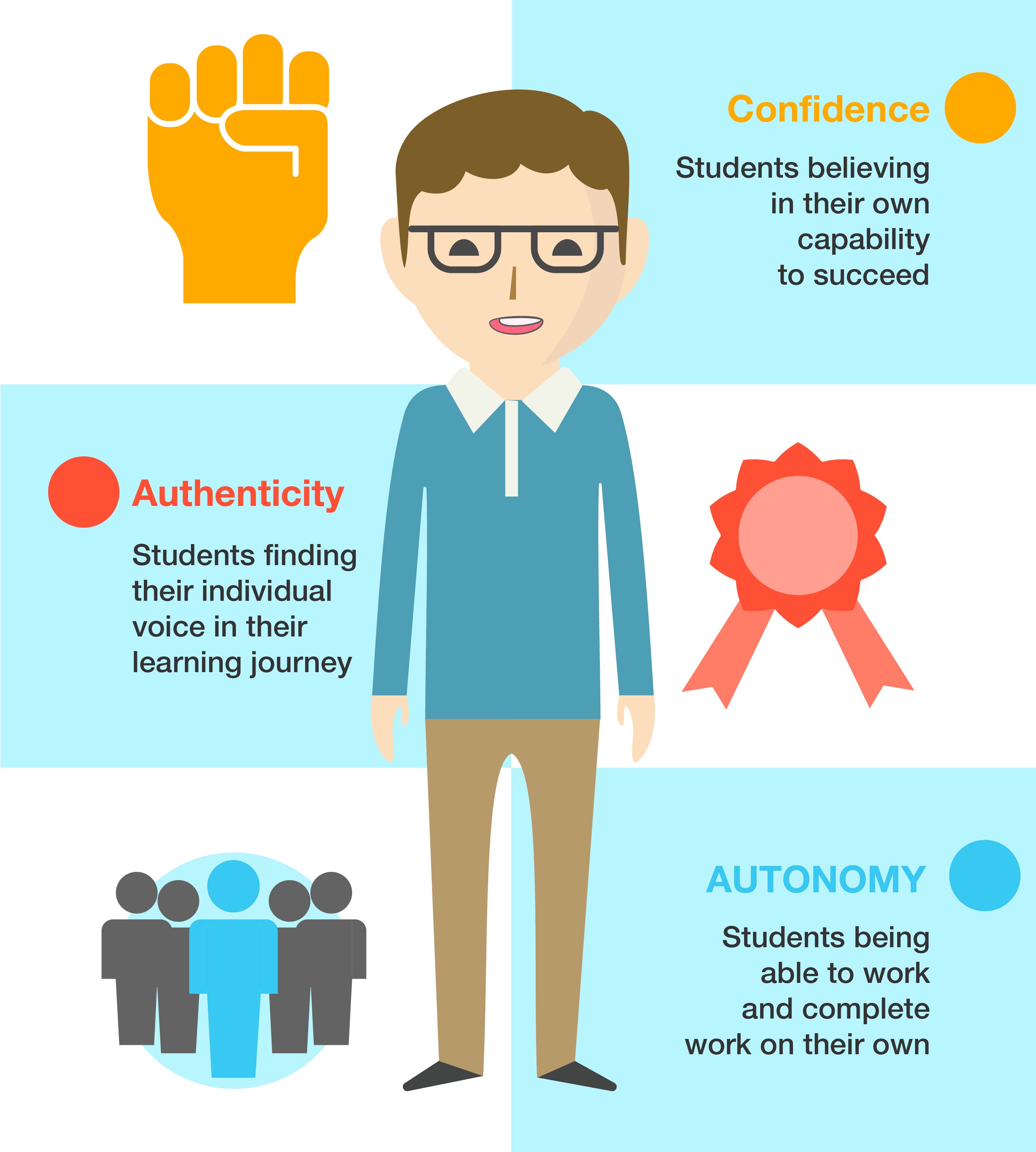
If all of these, life skills, can be developed through hands-on projects and activities, then rather than thinking, "only some students will like this", as teachers, we should be thinking, "these should always be included in any lesson plan".
No student can actually afford to not be successful at hands-on learning if their future learning, growth and success is the overall goal.
TIP: Think how every activity you're planning for your students can be designed as truly hands-on
Coming up next, "How can you do hands-on, online?" Stay tuned...