
| Posted November 14, 2025 | By Joshua Lomelino, M.F.A. | Categorized under Memberships Mastery Podcast |
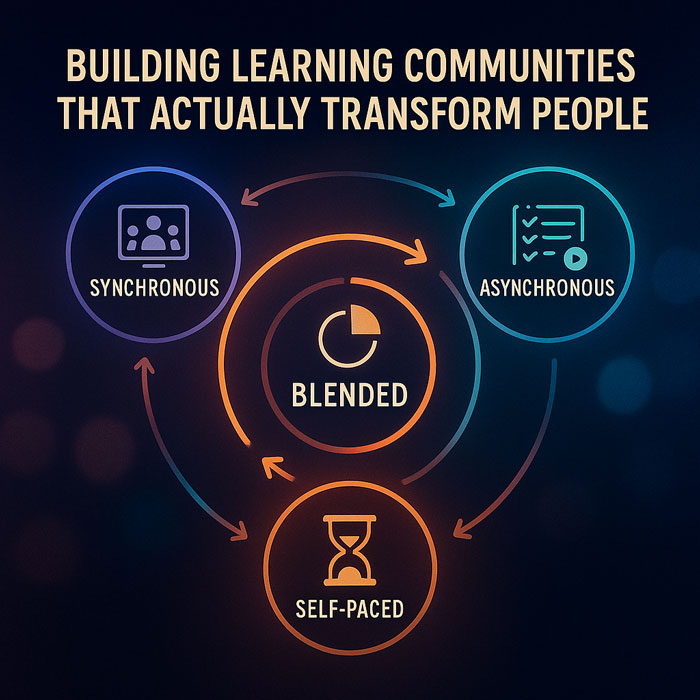
Over the last few years, I've heard some version of the same question from coaches, course creators, and program directors:
"Purely online content isn't creating the same engagement it used to. People are craving connection. How do we extend the potential of online courses by building true community around them? And what tools actually support that?"
It's a fair question.
But here's what I've discovered after leading more than 3,500 learners over the past 20+ years.
We're obsessing over platforms when we should be mastering recipes.
I've been privileged to lead doctorate students, graduate and undergrad students, high schoolers, homeschoolers, and even kids learning drums and guitar. Across those wildly different environments, one pattern keeps surfacing:
People learn better when they're in community and when they're having fun.
That's not the only way transformation happens. But it's a powerful ingredient in a larger mix of ingredients. The real art is knowing how much of each ingredient to use, in which order, for which learners.
And that's where community design comes in.
I have a friend who's a Michelin-star chef. My daughter loves to point out that his cooking tastes better than mine.
On paper, that shouldn't be true.
We can buy similar ingredients. We both have access to good equipment. We can follow the same recipe.
But his dishes land differently.
The difference isn't just what he uses — it's how he combines timing, temperature, and technique. He understands the interaction between ingredients at a level I don't. He knows when to add heat, when to pull back, when to let something rest, and when to serve it immediately.
Community building is like that.
Most of us are using the same basic ingredients:
The difference between a "dead" community and a transformative one isn't the platform. It's how intentionally those ingredients are combined.
You can have the most expensive kitchen in the world, but if you don't understand the chemistry of cooking, your food will still disappoint. Similarly, you can have Circle, Heartbeat, Discord, Slack or whatever the latest community platform, but without understanding the architecture of transformation, your community will feel empty and you won’t see the full level of engagement and transformation possible.
Over the years, my teaching experience has fallen into four core models. Each one changes the type of community that's possible.
 Method 1: Synchronous Cohort – Everyone Together, Same Time
This is the classic classroom model: 20+ people in a room (or on Zoom), fixed times each week, clear start and end dates, shared outcomes, and a common set of assignments.
Done well, it's incredibly powerful.
You get:
In my early years of teaching, this is what I lived in: deep, project-based learning, not just lectures and multiple-choice tests. We built thoughtful assignments that actually moved people toward their goals. I acted as mentor and guide while the group pushed forward together.
But synchronous learning has a shadow side:
It's powerful — but not complete.
 Method 2: Fully Asynchronous – Learning Without You in the Room
Out of necessity, I stumbled into a very different model.
I had international students and English language learners who struggled to keep up with the group dynamics in fast-paced, English-only discussions. So I started recording my lectures and making them available after class.
I still remember walking through the university and hearing my own voice echoing from different computer labs. It was eerie.
But it revealed something important: Students could continue to learn, even when I wasn't in the room.
When online education started to take off, I asked a new question: What if students could learn from me and engage with each other… without me being there at all?
That led to fully asynchronous programs:
A typical rhythm might look like:
This keeps everyone moving forward together, but with freedom to choose the exact time of day they participate.
The asynchronous model offers:
This is where I draw inspiration from Maria Montessori, who said she knew her work was effective when the students didn't realize she was there at all.
However, fully async has its own pitfalls:
Simply dropping content into a platform and opening a discussion forum is not the same as creating transformation.
The design of the experience — the rhythm, the triggers, the prompts, the milestones — is where the magic happens.
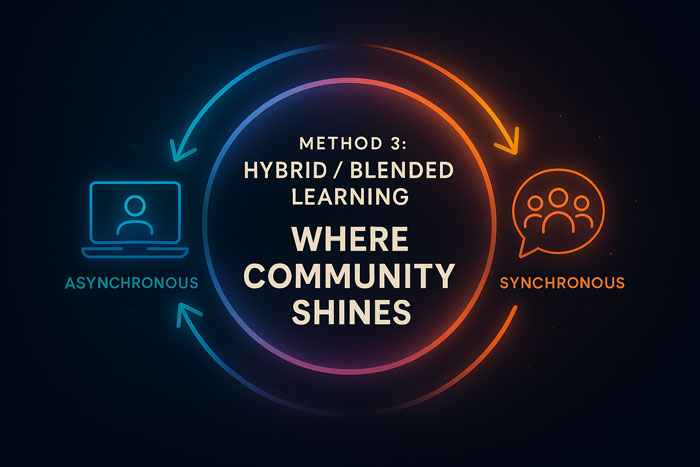 Method 3: Hybrid / Blended Learning – Where Community Shines
Over time, I've become convinced that the most powerful model — especially for adult learning and transformation — is a blended approach:
The structure and flexibility of asynchronous learning + The energy and depth of live, synchronous touchpoints.
Here's why:
Synchronous sessions are great for real-time conversation and connection. Asynchronous spaces give room for reflection, application, and introverted voices.
In a pure live model, extroverts tend to dominate and introverts go unheard. In a pure asynchronous model, people can feel isolated. Blending the two allows all kinds of learners to participate meaningfully.
Practically, this looks like:
Design the asynchronous backbone first:
Layer in live, structured sessions:
The live call isn't "sage on the stage" time.
It's Socratic.
You get the expert in the room. You gather engaged learners. You ask deep questions. And everyone learns from everyone else.
A faculty member once asked me at a development conference:
"Are you going to be the sage on the stage or the guide on the side?"
In that moment, something clicked.
My job wasn't to perform. It was to architect the experience — to design the community, the rhythm, and the touchpoints so that transformation could happen between the learners as much as it did from me to them.
That's why I believe a well-designed hybrid model offers one of the brightest futures for online education, memberships, and coaching programs.
 Method 4: Self-Paced, On-Demand – It Can Change Lives
There's a fourth model that's worth mentioning: The fully self-paced, on-demand program.
This is where people buy access to your curriculum and go through it independently: no calls, no live Q&A, minimal or no community interaction.
I'm not going to pretend this can't work. It can.
I've seen people:
All from self-paced, on-demand learning with no live Zoom calls.
So I don't dismiss it.
What I am advocating for is levels of effectiveness.
Yes, people can learn alone. But over and over, I see:
We learn better in community. We learn better when there's an element of play, curiosity, interaction, and shared momentum.
And those elements can be intentionally designed into your programs — regardless of whether you're using Heartbeat, Circle, Slack, Discord, or something custom.
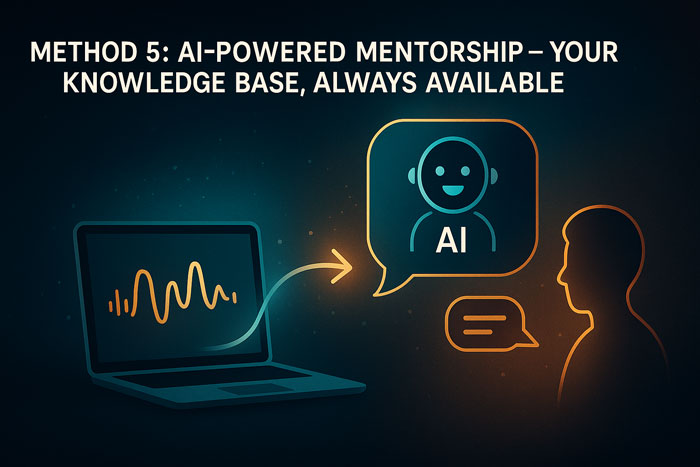 Method 5: AI-Powered Mentorship – Your Knowledge Base, Always Available
Here's a fifth model that's emerging as a powerful complement to everything we've discussed: AI chatbot mentorship.
Think of this as having a 24/7 tutor or mentor that can respond to learners on demand — trained on your knowledge base, your content, your frameworks, and your teaching style.
This isn't about replacing you. It's about extending your reach and availability.
When a learner hits a roadblock at 11 PM on a Tuesday, they don't have to wait until the next office hours or live call. They can ask questions and get guidance immediately, based on the content and principles you've already created.
What makes this model powerful:
The AI becomes a teaching assistant that knows your material inside and out. It can:
The limitations are real, though:
An AI can't replace human intuition, empathy, or the nuanced reading of what someone really needs in a given moment. It can't celebrate breakthroughs with genuine joy or sit with someone in their frustration the way another human can.
But what it can do is handle the straightforward questions, the "where do I find this?" moments, and the basic troubleshooting — freeing you up to focus on the deeper, more meaningful interactions where your human expertise matters most.
I'm watching coaches and educators blend this AI layer into hybrid models with fascinating results. The AI handles the always-on support, while the human facilitator focuses on the live calls, the deeper questions, and the transformation that happens in community.
It's not either/or. It's another ingredient in the mix.
So… Does the Platform Matter?
Tools matter, but not nearly as much as we think.
You can use:
The real question isn't: "Which platform should I use?"
The better questions are:
From there, you can:
When you do that, the app becomes a container, not the solution.
Any decent platform can support meaningful transformation if the experience design is solid.
What This Means for You as a Coach or Course Creator
If you've noticed that "stand-alone course sales" are declining or engagement is dropping, you're not broken — and your content probably isn't the problem.
You're likely running into the limits of content-only learning.
People don't just want information anymore. They want:
You don't need a perfect platform to create that. You need a thoughtful mix of:
When those elements come together, community stops being "a feature" and becomes the fabric of your entire learning experience.
If You'd Like Help Designing This
If you'd like a deeper look at how to architect this kind of environment, I've put everything I've learned from 20+ years of building dynamic learning communities into a practical resource:
The Dynamic Learning Community Planner — How to design effective learning by building blended, community-driven experiences.
If you'd like a copy, send me a message, and I'll share the exact framework and template I use every time I build a new online class or membership community.
And if you're exploring platforms like Heartbeat, Circle, or AMP and you want to talk through what model might serve your people best, I'm happy to share what I've seen work — and where the hidden pitfalls are.
Because in the end, the goal isn't to launch another course.
It's to build communities where people actually change, together.
Now I'm curious:
Which learning model resonates most with your current community — or the one you're building? Have you experienced the "eerie echo" moment where you realized learning was happening without you in the room?
Drop a comment below and let me know what's working (or not working) in your community right now.
By Joshua Lomelino, M.F.A.
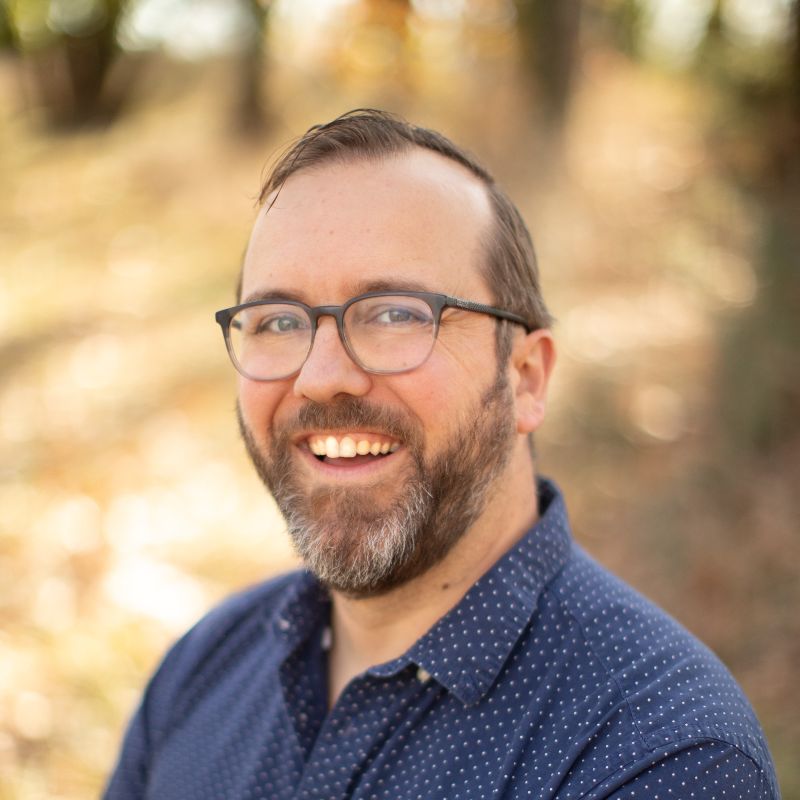
Joshua Lomelino, an award-winning designer and educator, developed a framework that eradicated his debts, allowing him to prioritize family time and achieve financial freedom. He transformed his side hustle into a successful venture and now shares his expertise to help others replicate his success. Josh is passionate about helping others make a substantial income with less effort while making a positive impact.
Over the past twenty-five years he’s helped everyone from student entrepreneurs to Fortune 50 companies all over the globe. He’s worked as a graphic designer, web designer, app designer, and full-time educator. He’s dedicated his life to helping others work smarter, not harder. As the founder of Anomaly Studios he has provided digital marketing services, automation, app and UX design, and so much more. His greatest joys are spending time with family and inspiring others to pursue their creative dreams.